GCL SI's Newly Launched EcoPower Mate Mobile PV Storage Solution to Debut at SNEC 2026
SUZHOU, China, May 13, 2026 /PRNewswire/ -- GCL System Integration Technology Co. Ltd (hereafter referred to as "GCL SI") announced that its newly launched EcoPower Mate mobile PV storage solution will make its first public appearance at the 19th SNEC International Photovoltaic Power Generation and Smart Energy Conference & Exhibition (SNEC 2026), taking place at the National Exhibition and Convention Center (NECC) in Shanghai from June 3–5. Designed to support operation sites facing power-constrained or complex energy conditions, especially in remote regions, the integrated mobile photovoltaic solution enables rapid deployment, flexible transportation, and lower-emission power generation across a wide range of off-grid applications.
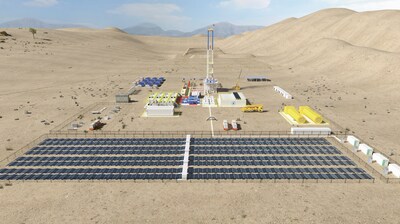
Off-grid operations like oil and gas extraction still rely on diesel generators, costing up to 275% more than solar PV. This heavy financial burden is coupled with lower operational flexibility, high maintenance needs, and increasingly strict environmental regulations.
Against this backdrop, there is clear and growing demand for standardized, integrated, and deployable mobile solar solutions that can reduce operating costs while improving efficiency and sustainability, especially for remote communities and industrial sites.
Designed for extreme conditions, rapid deployment, and high energy efficiency, the EcoPower Mate series by GCL SI provides a new pathway to zero-carbon transformation for traditional energy-intensive industries, tackling the pain points through an advanced mobile energy storage solution. It also represents GCL SI's strategic expansion into integrated scenario-specific solutions and strengthens the company's position in the growing global market for off-grid energy substitution.
EcoPower Mate offers three configurations compatible with most mainstream inverters and offers exceptional adaptability for various application scenarios:
- RG20-M (117.7kW): A rail-mounted solution optimized for long-term, fixed installations such as mining and oil and gas sites, offering high structural durability and low maintenance requirements.
- RG20-A (94.16kW): A rail-mounted, fully automated "one-click" system designed for high-yield efficiency in labor-constrained environments, offering exceptional adaptability to diverse site and soil conditions through its plug-and-play architecture.
- WG20-A (46.56kW): A wheel-mounted, rapid-deployment model ideal for emergency power, temporary sites, and rental markets, featuring a pile-free design that can be commissioned on terrain with up to a 2° slope. The system can be deployed without the need for complex on-site infrastructure, enabling fast installation and redeployment across challenging environments.
By reducing reliance on diesel fuel, EcoPower Mate significantly lowers total cost of ownership. It delivers a 63% reduction in levelized cost of energy (LCOE), decreasing from $0.28–0.32/kWh for diesel generation to $0.10–0.12/kWh, while also cutting installation costs by over 50%, reducing operation and maintenance expenses by 40%, and improving asset utilization by 30%. At the same time, the solution enables zero-emission, low-noise power generation, supporting the transition to cleaner energy operations.
Built for versatility, EcoPower Mate supports off-grid, hybrid and grid-connected applications across a range of industries. Key use cases include remote industrial operations such as mining and oil and gas, infrastructure projects in isolated regions and islands, as well as emerging applications such as renewable-powered data centers. Its rapid deployment capability also makes it suitable for temporary construction, agricultural production and other distributed energy scenarios.
Looking ahead, GCL SI will bring EcoPower Mate to more international markets, with its first overseas installations currently underway in Saudi Arabia, marking the start of its global deployment and entry into the Middle East market.
At SNEC 2026, GCL SI will further showcase EcoPower Mate alongside its broader portfolio of integrated renewable energy solutions, inviting global partners and industry stakeholders to explore the product's application potential across diverse off-grid scenarios.
Photo - https://mma.prnewswire.com/media/2978907/5de0b2096a13cd89c82bc2b813368ddd.jpg
 View original content:https://www.prnewswire.co.uk/news-releases/gcl-sis-newly-launched-ecopower-mate-mobile-pv-storage-solution-to-debut-at-snec-2026-302770686.html