LG TO SUPPLY INTEGRATED COCKPIT SOLUTION FOR RENAULT GROUP'S FIRST COMMERCIAL SDV
Consolidation of Instrument Cluster and Infotainment System Helps Deliver a Unified In-Vehicle Experience and Optimized System Architecture
News Summary
- LG Electronics will supply its integrated cockpit solution for Renault Group's New Trafic E-Tech Electric, the automaker's first mass-produced commercial vehicle built on a software-defined vehicle (SDV) architecture and recipient of the International Van of the Year award.
- The solution integrates the instrument cluster and infotainment system in a control framework optimized for SDVs, enabling a more intuitive and unified UX/UI while helping automakers reduce production costs through component simplification and design optimization.
- The solution builds on LG's extensive automotive infotainment development experience, software expertise and UX/UI capabilities, as well as its long-standing partnership with Renault Group.
SEOUL, South Korea, Oct. 6, 2026 /PRNewswire/ -- LG Electronics (LG), a leader in mobility innovation, will supply its integrated cockpit solution for Renault Group's New Trafic E-Tech Electric, the automaker's first mass-produced commercial vehicle built on a software-defined vehicle (SDV) architecture, which won the International Van of the Year award.
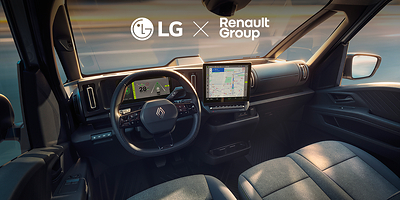
Combining the instrument cluster and infotainment system, LG's unified solution plays an integral role in the vehicle, enabling a more seamless and intuitive user experience while supporting a software-centric approach to vehicle development.
An Integrated Cockpit Solution Optimized for SDVs
LG's integrated cockpit solution is optimized for SDVs, which are rapidly becoming the new standard for the mobility sector. While conventional vehicles distribute control functions across dozens of electronic control units (ECUs) dedicated to specific areas or systems, such as the cockpit, advanced driver-assistance systems (ADAS) and powertrain, SDVs use high-performance computing and a centralized software architecture to integrate the control of multiple vehicle functions.
Another key advantage of SDVs is the ability to continuously add new features and upgrade existing ones via over-the-air (OTA) software updates.
Designed specifically for SDV environments, LG's solution integrates the control of the instrument cluster and infotainment system, serving as a key control platform for the cockpit domain. The cluster element provides driving information such as vehicle speed, revolutions per minute (RPM) and warning indicators, while the infotainment system supports features including navigation and media playback. This allows driving and infotainment information to be presented in a more consistent and intuitive way across the vehicle's displays. In addition to elevating the in-vehicle experience, LG's innovation helps automakers reduce costs through component simplification and system optimization.
Building on Proven Expertise and Strong Partnerships
LG's ability to deliver advanced solutions tailored for SDVs is rooted in its technological expertise accumulated over many years and strong industry partnerships. Drawing on its extensive experience in automotive infotainment development, software expertise and UX/UI capabilities cultivated through its mobile, TV and home appliance businesses, LG has been recognized as a trusted partner in automotive instrument clusters and infotainment systems.
LG and Renault Group have built a long-standing relationship of trust through years of close collaboration. LG was recognized by Renault Group as an outstanding supplier in 2014, 2017 and 2020, and the two companies worked together to develop an Android-based automotive infotainment system in 2021. Building on this proven collaboration, LG developed and delivered an integrated cockpit solution tailored for Renault Group's first production SDV.
Looking ahead, LG plans to further expand its partnerships with major global automakers across North America, Asia and other key markets, strengthening its position as a trusted supplier in the fast-growing SDV automotive electronics market.
"Building on our close collaboration with Renault Group and other global automakers, we will continue to advance the core technologies and solutions needed to support the mobility industry's transition to SDVs," said Eun Seok-hyun, president of the LG Vehicle Solution Company.
# # #
About LG Electronics Vehicle Solution Company
The LG Vehicle Solution Company (VS) is bringing LG's unique mobility innovations to the automotive industry. As a trusted and innovative partner, the company provides intelligent solutions including head units, displays, connectivity, ADAS vision systems, and software solutions integrating human-centered AI and automotive engineering into the modern AI/software-defined vehicle. Committed to "Driving better future mobility," the company has diversified its portfolio to further strengthen its capabilities, including automotive lighting systems, e-powertrain and cybersecurity. For more information, visit www.LG.com/global/mobility. To stay updated with the latest news, subscribe to the LG mobility newsletter, LG Loop at www.LG.com/global/mobility/newsletter and follow the LG VS Company LinkedIn channel at www.linkedin.com/company/lgvehiclesolution.
 View original content to download multimedia:https://www.prnewswire.co.uk/news-releases/lg-to-supply-integrated-cockpit-solution-for-renault-groups-first-commercial-sdv-302896833.html